+1 (216) 400-5753
 521 Valcour Rd, Catonsville, MD 21228, US

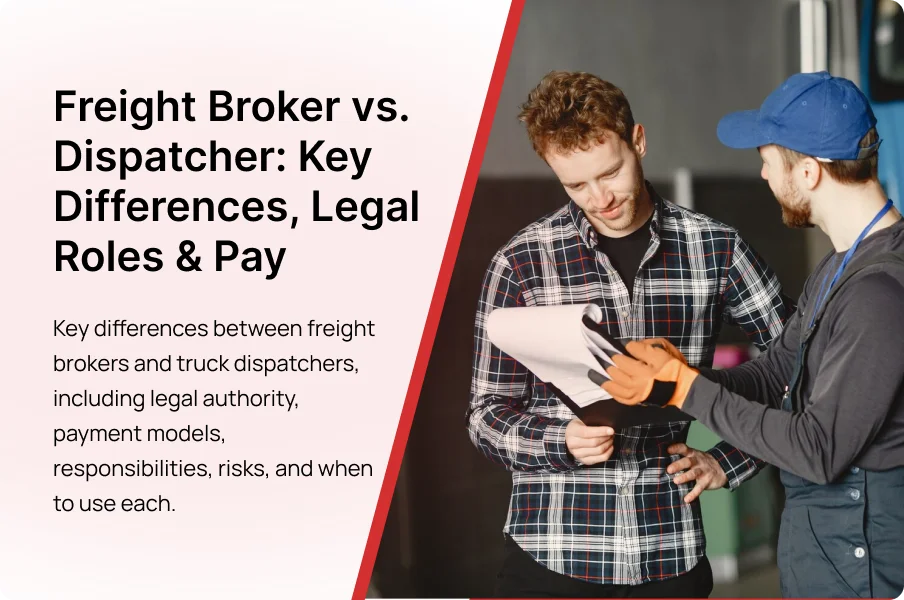
Freight brokers and truck dispatchers work in the same load cycle, but they do not serve the same party. A freight broker arranges transportation between a shipper and an authorized motor carrier. A truck dispatcher represents a carrier, owner-operator, or fleet and helps that trucking business find and manage loads.
This difference controls 5 major areas: legal authority, payment flow, daily tasks, liability exposure, and business loyalty.
What Is a Freight Broker?
A freight broker is a licensed transportation intermediary that arranges freight movement between a shipper and an authorized motor carrier. The broker does not need to own the truck or drive the load. The broker’s job is to connect freight with capacity, confirm carrier qualifications, manage communication, and keep the shipment moving.
A freight broker’s daily work includes:
- Finding freight from shippers
- Quoting transportation rates
- Sourcing authorized carriers
- Checking insurance and operating authority
- Sending rate confirmations
- Tracking pickup and delivery
- Managing service problems
- Coordinating invoices and carrier payment
A broker starts with freight that needs a truck. The shipper has a load. The broker finds a qualified carrier to move it.
What Is a Truck Dispatcher?
A truck dispatcher represents a carrier, owner-operator, or fleet. The dispatcher helps the trucking business find loads, negotiate rates, plan routes, manage paperwork, and support the driver during the trip.
A dispatcher’s daily work includes:
- Searching load boards
- Calling brokers
- Negotiating carrier rates
- Confirming pickup and delivery details
- Sending load information to drivers
- Watching hours-of-service limits
- Collecting BOLs and PODs
- Planning reloads before the truck becomes empty
A dispatcher starts with a truck that needs freight. The carrier has equipment. The dispatcher helps that carrier keep the truck loaded.
Freight Broker vs. Dispatcher: Core Difference
Freight brokers arrange freight between shippers and carriers. Truck dispatchers represent carriers and help them manage freight opportunities. The broker protects the freight transaction. The dispatcher protects the carrier’s truck revenue.
How Freight Brokers Get Paid
Freight brokers earn money through the spread between the shipper rate and the carrier rate.
Example:
A shipper pays the broker $2,500 for a load.
The broker pays the carrier $2,200.
The broker keeps $300 as gross margin before expenses.
That margin covers business costs such as staff, software, compliance, marketing, insurance, and payment processing.
How Truck Dispatchers Get Paid
Truck dispatchers are paid by the carrier. The 2 common pricing models are percentage-based fees and flat fees.
Common dispatcher fee models include:
- 5% to 10% of gross load revenue
- Weekly flat fee per truck
- Monthly dispatch package
- Per-load dispatch fee
- Custom fleet support pricing
Example:
An owner-operator grosses $8,000 in 1 week.
The dispatcher charges 7%.
The dispatch fee is $560.
Freight Broker Legal Requirements
A freight broker generally needs FMCSA broker authority before arranging regulated interstate freight for compensation. A standard broker setup includes broker authority, financial responsibility, Form BOC-3, contracts, carrier vetting, and recordkeeping.
For property brokers, FMCSA requires a BMC-84 surety bond or BMC-85 trust fund agreement in the amount of $75,000. Brokers must also complete Form BOC-3 and pay the FMCSA application fee.
Truck Dispatcher Legal Boundary
A truck dispatcher usually does not need separate broker authority if the dispatcher acts only as the carrier’s representative. The dispatcher should work under a written agreement with the carrier, receive payment from the carrier, and arrange freight only for that carrier.
A dispatcher enters broker territory when it accepts freight from shippers, chooses between multiple carriers for the same shipment, accepts payment from brokers or factoring companies, or books freight before a specific carrier is assigned.
Clean rule: dispatchers serve trucks. Brokers arrange freight between parties.
Comparison Table
| Factor | Freight Broker | Truck Dispatcher |
| Main role | Connects shippers with carriers | Represents carriers or owner-operators |
| Starts with | Freight that needs a truck | Truck that needs freight |
| Works for | Shipper or freight customer | Carrier, owner-operator, or fleet |
| Payment model | Spread between shipper rate and carrier rate | Percentage fee or flat fee from the carrier |
| Legal authority | Needs FMCSA broker authority | Usually works under carrier authority |
| Main goal | Move freight profitably | Keep trucks loaded profitably |
| Main risk | Operating without broker authority | Acting like a broker without authority |
| Common tools | TMS, CRM, carrier vetting tools, rate tools | Load boards, route tools, ELD/HOS tools, factoring portals |
When to Use a Freight Broker
Shippers use freight brokers when they need transportation capacity without managing carrier sourcing themselves. Freight brokers fit businesses such as manufacturers, warehouses, wholesalers, construction suppliers, food distributors, and eCommerce logistics teams.
A freight broker fits these needs:
- Urgent shipments
- New shipping lanes
- Seasonal freight volume
- Spot market capacity
- Multi-carrier coverage
- Carrier cancellation recovery
- One point of contact for freight movement
When to Use a Truck Dispatcher
Carriers use truck dispatchers when they need load search, rate negotiation, route planning, and paperwork support. Dispatchers fit solo owner-operators, new authorities, small fleets, and carriers with limited back-office staff.
A truck dispatcher fits these needs:
- Load board support
- Better reload planning
- Rate negotiation
- Paperwork control
- Driver communication
- Route planning
- Detention and layover follow-up
- Fewer empty miles
Can a Carrier Use Both?
A carrier can use both. The broker provides freight. The dispatcher manages the truck for the carrier.
Example:
An owner-operator hires a dispatcher. The dispatcher books freight from several licensed brokers. The dispatcher negotiates rates, confirms load details, sends paperwork, and supports the driver. The broker still arranges the freight transaction. The dispatcher still represents the carrier.
The structure becomes risky only when the dispatcher accepts shipper freight and assigns it to carriers without broker authority.
Conclusion
Freight brokers and dispatchers have different roles. A freight broker arranges transportation between shippers and authorized carriers. A truck dispatcher represents the carrier and helps the truck stay loaded, organized, and profitable.
The difference is not only in the wording. It affects authority, payment, liability, contracts, compliance, and business loyalty.