 +1 (216) 400-5753
 521 Valcour Rd, Catonsville, MD 21228, US

Trucking Accounting Services for Owner-Operators & Fleets
Trucking financial services like bookkeeping and accounting control how revenue, expenses, and payments move across your operation. Every load, mile, fuel expense, and broker payment is recorded, categorized, and analyzed to maintain profitability at MNA Transport Solutions, LLC.
Get a Load and Dispatching Services Fast
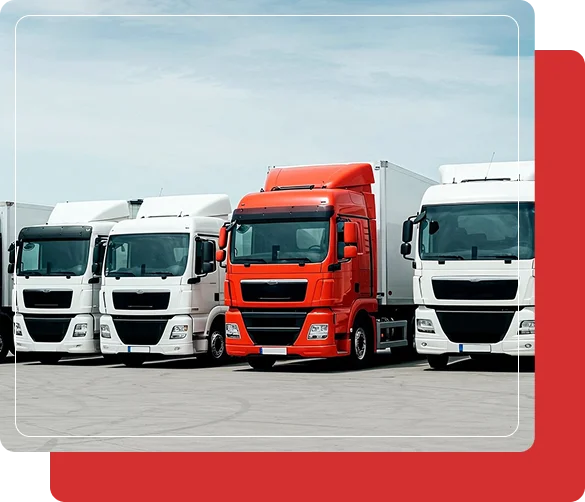
Trucking Financial Services & Their Impact
Trucking accounting manages financial activity from load booking → payment collection → expense tracking → reporting → filing.
Standard accounting tracks income and expenses. Trucking accounting tracks profit per mile, cost per load, and multi-state filing exposure.
Key difference comes from operational linkage:
- Revenue depends on rate per mile (RPM)
- Costs depend on fuel, maintenance, deadhead
- Compliance depends on multi-state reporting
Without structured accounting, profit loss is invisible.
How Dispatch Data Turns
Into Revenue Records
Accounting starts where dispatch ends. A load is not revenue
until it is documented, invoiced, and collected.
Workflow Flow (Operational → Financial)
- Load booked → rate confirmation received
- Load delivered → BOL + POD generated
- Invoice created → broker/factoring submission
- Payment received → recorded + reconciled
Core Financial Documents
- Rate Confirmations → define revenue
- Bill of Lading (BOL) → validates shipment
- Proof of Delivery (POD) → triggers payment
- Carrier Packets → compliance + identity
Financial Metrics That Control
Trucking Profit
Profit in trucking is not estimated. It is calculated
using specific metrics
| Metric | What It Tracks | Why It Matters |
|---|---|---|
| RPM (Revenue Per Mile) | Earnings per mile | Determines revenue strength |
| CPM (Cost Per Mile) | Cost per mile | Controls expenses |
| Deadhead % | Empty miles | Reduces efficiency |
| Gross Profit | Revenue – direct costs | Operational performance |
| Net Profit | Final earnings | Business viability |
Weekly Profit Plan for
Owner-Operator
We are giving you a free customize profit plan for your fleet
Get Weekly Plan
What’s Included in Trucking Accounting Services?
A complete system does not stop at bookkeeping. It covers the full financial cycle.

Expense Tracking & Bookkeeping
Fuel, tolls, repairs, insurance, permits, and recurring costs are categorized and recorded
- Clear expense visibility
- No missing deductions
- Accurate financial base

Driver Settlements & Payroll Handling
Driver payments are calculated based on load revenue and deductions.
- Per-load or percentage-based payouts
- Fuel and advance deductions
- Weekly settlement reports

Invoice Management & Payment Tracking
Each completed load converts into an invoice.
- Broker invoice creation
- Factoring submission
- Payment status tracking

Records & Compliance Management
Trucking operates across multiple states and accounting procedures.
- Quarterly Financial Audits
- 1099 filing for drivers
- Audit-ready financial records
Systems Used in Modern
Trucking Accounting
Manual accounting creates delays and errors.
Modern
systems automate financial tracking.

Core Systems
Cloud accounting platforms
Transportation Management Systems (TMS)
Financial dashboards

Integrated Data Sources
ELD (mileage tracking)
Fuel cards (expense tracking)
Bank feeds (real-time transactions)
Factoring platforms
How Accounting Improves Revenue
and Reduces Loss
Accounting is not just tracking—it is decision-making.
Revenue Optimization
- Identify high-paying lanes
- Track broker payment performance
- Measure RPM consistency
Cost Control
- Monitor fuel usage
- Track maintenance trends
- Control deadhead costs
Profit Protection
- Detect hidden expenses early
- Prevent revenue leakage
- Maintain financial stability
How Accounting Improves Revenue and Reduces Loss
Accounting is not just tracking—it is decision-making.
Revenue Improvement Comes From:
- Identifying high-paying lanes
- Tracking broker payment performance
- Measuring RPM consistency
Cost Reduction Comes From:
- Fuel usage monitoring
- Maintenance trend tracking
- Deadhead cost control
Untracked costs reduce profit faster than low rates.
Advanced Financial Insights
That Most Carriers Miss
Basic accounting shows totals.
Advanced
accounting shows profit drivers.

Profit per load → which loads actually pay
Profit per lane → which routes are worth running
Driver performance → revenue vs cost per driver
Expense ratios → cost categories affecting margins
Accounting & Compliance Structure in Trucking Accounting
Trucking compliance is not optional. It is regulated.
Our Coverage Areas
- Federal Legal filings
- State Legal obligations
- Deduction optimization (fuel, repairs, depreciation)
- Audit preparation

Complete Accounting Workflow
(End-to-End System)
Data collection (fuel, ELD, bank feeds)
Transaction categorization
Expense tracking
Invoice & settlement processing
Financial reporting
Accounts and compliance
Get a Load in 30-Minutes
Maximize your revenue per mile with strategically selected loads, not random bookings. MNA Transport focuses on high-rate freight, smart lane planning, and strong broker negotiation to secure loads that actually increase your weekly earnings. From rate confirmation to paperwork, everything is handled for you—so you haul smarter, not harder.
Get a load
Who Needs Trucking
Accounting Services?
Different operators require different
levels of financial control.

Owner-Operators
→ track profit per truck

Small Fleets
→ manage multi-truck finances

New Authorities
→ set up compliant systems

Growing Carriers
→ scale financial operations
Outsourced vs In-House Accounting
(Operational Reality)
| Factor | In-House Accounting | Outsourced Accounting |
|---|---|---|
| Cost | Fixed salaries | Flexible cost |
| Accuracy | Depends on staff | Process-driven |
| Compliance | Risk of errors | Structured system |
| Time | High involvement | Minimal involvement |
What Defines a High-Performance
Trucking Accounting System?
A strong system is not defined by tools—it is defined by output.
Real-time financial tracking
Dispatch-integrated revenue flow
Automated invoicing and reconciliation
Clear profitability metrics
Audit-ready compliance records
Start Dispatching With a Dedicated System
Operate with a dispatcher who manages your freight, negotiation, paperwork, and coordination.
Increase consistency. Reduce empty miles. Improve revenue performance.
Frequently Asked Questions
What are trucking accounting services?
Trucking accounting services handle income tracking, expense records, fuel costs, driver payments, tax preparation, IFTA reporting, and financial statements for owner-operators and fleets.
Why do owner-operators need trucking accounting?
Owner-operators need trucking accounting to track profit per load, manage fuel and maintenance costs, avoid tax mistakes, and understand how much money the truck is really making.
What expenses should truck drivers track for taxes?
Truck drivers should track fuel, repairs, tires, insurance, permits, tolls, meals, lodging, truck payments, dispatch fees, factoring fees, and office expenses.
Do trucking accounting services help with IFTA reporting?
Yes. Trucking accounting services help organize mileage, fuel receipts, state-by-state travel records, and fuel tax data needed for accurate IFTA reports.
How can accounting help trucking fleets increase profit?
Accounting helps fleets find high-cost lanes, reduce unpaid invoices, control fuel spending, monitor driver settlements, and review profit by truck, route, and customer.
Is trucking bookkeeping different from regular bookkeeping?
Yes. Trucking bookkeeping includes industry-specific records like fuel tax, mileage tracking, driver settlements, load payments, maintenance costs, permits, tolls, and equipment expenses.
Have Any Query Regarding Truck Dispatching?