 +1 (216) 400-5753
 521 Valcour Rd, Catonsville, MD 21228, US

Lowboy Dispatch Services for Heavy Haul & Oversized Freight
Lowboy truck dispatch focuses on engineering feasibility, regulatory alignment, and execution control to move equipment that cannot travel on standard trailers. Every dispatch decision is built around height clearance, axle distribution, and route legality.
Get a Load and Dispatching Services Fast
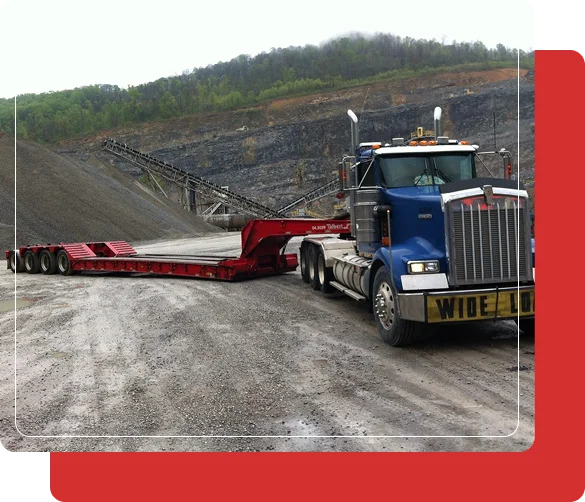
What Makes Lowboy Freight Dispatch Different
Lowboy transport operates under physical constraints that directly affect load movement.
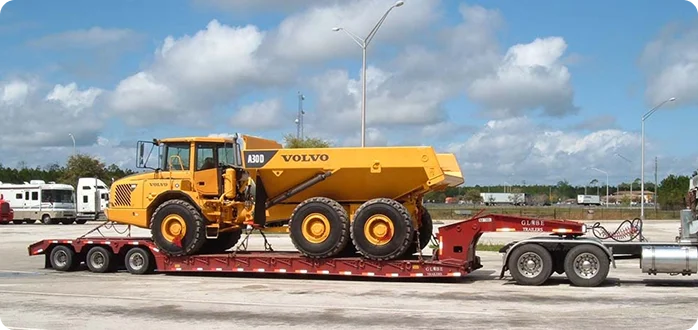
A lower deck structure allows transport of tall machinery without exceeding legal height limits. This changes how freight is selected and matched. Loads such as excavators or cranes cannot be reconfigured, so dispatch decisions must align with fixed dimensions and structural limitations.
Axle configuration introduces another layer of complexity. Unlike standard freight, weight must be distributed across multiple axles to avoid violations. Lowboy dispatcher’s planning includes load positioning, axle count selection, and pressure balancing, ensuring the shipment remains compliant across all jurisdictions.
Equipment & Trailer Configurations
in Lowboy Dispatch
Different trailer types are selected based on loading method, weight, and clearance requirements:

Removable Gooseneck (RGN)
Enables drive-on loading for heavy tracked equipment without cranes

Fixed Gooseneck (FGN)
Provides structural stability for extremely heavy loads during long hauls

Double Drop Trailer
Designed for maximum vertical clearance through its lower well section
Get a Load in 30-Minutes
Maximize your revenue per mile with strategically selected loads, not random bookings. MNA Transport focuses on high-rate freight, smart lane planning, and strong broker negotiation to secure loads that actually increase your weekly earnings. From rate confirmation to paperwork, everything is handled for you—so you haul smarter, not harder.
Get a load
Freight Profiles Handled Through
Lowboy Dispatch Systems
Lowboy dispatching supports freight that exceeds standard transport limits:
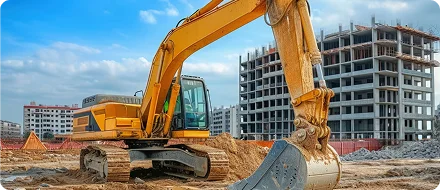
Construction Equipment
Includes bulldozers and excavators used in heavy-duty projects. Requires specialized handling due to weight and mobility constraints.

Industrial Units
Covers generators and transformers used in industrial operations. Needs secure transport with proper weight distribution and stability.
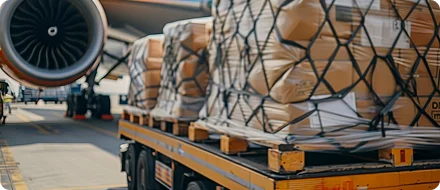
Oversized Cargo
Includes irregular and extended-dimension freight beyond standard limits. Requires permits, route planning, and compliance with size regulations.
Load Evaluation Before Lowboy Dispatch
Accurate technical assessment ensures safe, compliant, and profitable load approval.

Dimensional Limits
Evaluates load size against legal transport standards.
- Height restrictions based on bridge clearances
- Width limits for lane safety and escort needs
- Length constraints for maneuverability and permits

Weight Classification
Checks load weight against legal and axle thresholds.
- Gross vehicle weight compliance (GVW limits)
- Axle weight distribution requirements
- State-specific weight regulations

Center of Gravity
Ensures proper balance for safe transportation.
- Load positioning to prevent tipping risk
- Even weight distribution across trailer
- Stability during turns and braking

Compliance Validation
Verifies all parameters before dispatch approval.
- Permit requirements for oversized loads
- Route restrictions and legal approvals
- Documentation accuracy to prevent violations
Route Selection for Oversized and Heavy Equipment Transport
Route planning for lowboy freight involves structural analysis rather than distance optimization.
Bridge capacities are reviewed to ensure safe passage under weight constraints. Overpass and tunnel clearances are mapped to prevent height-related incidents. Certain roads restrict oversized loads entirely, requiring alternate routing.
Urban environments introduce additional limitations, including turning radius restrictions and congestion-based constraints. Every route is engineered to match load dimensions with infrastructure capability.
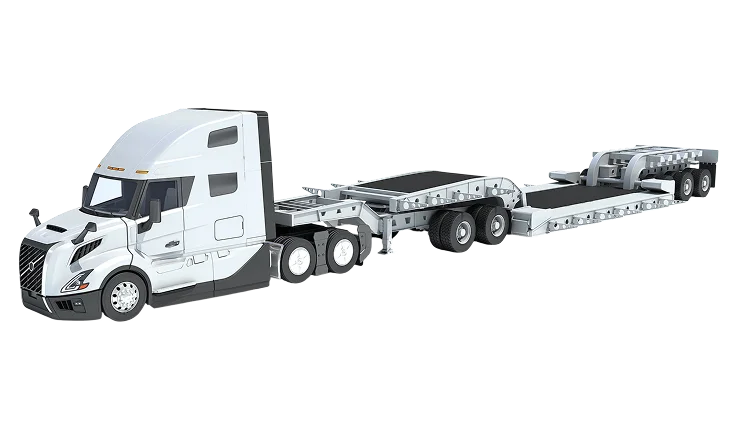
Heavy Haul Compliance & Safety
Permits and escort coordination ensure legal movement and
controlled transport of oversized freight.
Permit Management
- Single-trip permits for one-time movements
- Annual permits for repeated in-state operations
- Superload permits for extreme dimensions or weight
- Multi-state coordination for route and timing compliance
Escort Coordination
- Pilot cars for traffic control and lane guidance
- Warning banners for oversized load identification
- Lighting systems for enhanced road visibility
- Flagging protocols for extended or wide loads
Rate Structure & Cost Variables in
Lowboy Freight Dispatch
Lowboy freight pricing is influenced by multiple operational variables:
| Cost Component | Impact | Description |
|---|---|---|
| Rate per mile | Adjusted based on load complexity | Higher for oversized, specialized, or high-risk freight |
| Permit costs | Vary by state and load classification | Depends on dimensions, weight, and number of states involved |
| Escort services | Required for safety compliance | Includes pilot cars, coordination, and traffic control support |
| Fuel surcharge | Depends on distance and weight | Increases with long hauls and heavier loads |
| Accessorial charges | Triggered by delays or special handling | Includes detention, layover, and additional service requirements |
Broker Selection & Load Validation
Only technically suitable and financially reliable freight
sources are approved for dispatch.

Payment reliability ensures consistent and timely cash flow
Experience with oversized freight reduces handling errors
Capability to manage complex shipments supports smooth execution
Load board filtering (DAT Solutions, Truckstop.com) ensures trailer and freight compatibility
Weekly Profit Plan for
Owner-Operator
We are giving you a free customize profit plan for your fleet
Get Weekly Plan
Dispatch Workflow Designed for
Lowboy Transport Execution
Lowboy dispatch follows a structured execution model:
Load feasibility
assessment
Equipment and trailer
matching
Permit and route
alignment
Load booking with
negotiated terms
Dispatch execution with
real-time coordination
Delivery monitoring and
completion
Lowboy Transport Risks Without
Structured Dispatch
Lack of structured planning increases compliance issues, delays,
and operational instability in heavy haul transport.


Operational Systems Used in Lowboy Dispatch Optimization
Advanced dispatch systems are used to manage complexity:
- Load filtering based on axle and weight compatibility
- Route validation tools for clearance and restrictions
- Compliance tracking systems for permit management
These systems enable data-driven decision-making instead of manual guesswork.
Key Factors That Determine a Successful
Heavy Haul Dispatch
A successful dispatch depends on three core elements:
Accurate load assessment ensures proper planning before booking
Route alignment with regulations prevents legal and safety issues
Multi-party coordination keeps operations smooth and controlled
Permit readiness avoids delays and compliance violations
Equipment compatibility ensures safe and efficient transport
Execution quality determines whether a load is completed
efficiently or becomes a liability.
Who Should Use Lowboy
Dispatching Services
Lowboy dispatch is designed for carriers handling specialized freight:

Owner-Operators
Independent drivers using curtain-side trailers for flexible and high-value freight movement.
Small Fleets
Fleet operators managing industrial freight with consistent load planning and dispatch support.

Steel Carriers
Transporters specializing in steel and metal loads requiring secure and damage-free handling.

Construction Haulers
Carriers moving building materials with demand driven by active construction projects.
Affordable but Effecient Truck Dispatching Solution


Frequently Asked Questions
What type of freight can a lowboy trailer haul?
Lowboy trailers are commonly used for excavators, bulldozers, cranes, loaders, tractors, industrial machines, and other equipment that cannot fit safely on standard flatbeds.
How does MNA Transport find lowboy loads?
MNA Transport searches reliable load boards, broker networks, and direct freight opportunities to find suitable lowboy loads based on your trailer type, weight capacity, preferred lanes, and availability.
Do you handle oversized and overweight load dispatching?
Yes. Lowboy dispatch often involves oversized or overweight freight. Our dispatch team helps coordinate load details, route planning, broker communication, and required documentation support.
Do lowboy loads pay better than regular flatbed loads?
Many lowboy loads pay higher because they involve specialized equipment, heavier freight, permits, route planning, and more responsibility. Final rates depend on distance, weight, dimensions, market demand, and lane availability.
Do you help with permit coordination for lowboy freight?
We help coordinate permit-related details with brokers and required parties. Since permit rules vary by state, load size, and route, every shipment is reviewed carefully before movement.
What information do you need to start lowboy dispatching?
We usually need your MC authority, insurance details, W-9, equipment type, trailer specifications, preferred lanes, and driver availability to begin dispatching.