+1 (216) 400-5753
 521 Valcour Rd, Catonsville, MD 21228, US

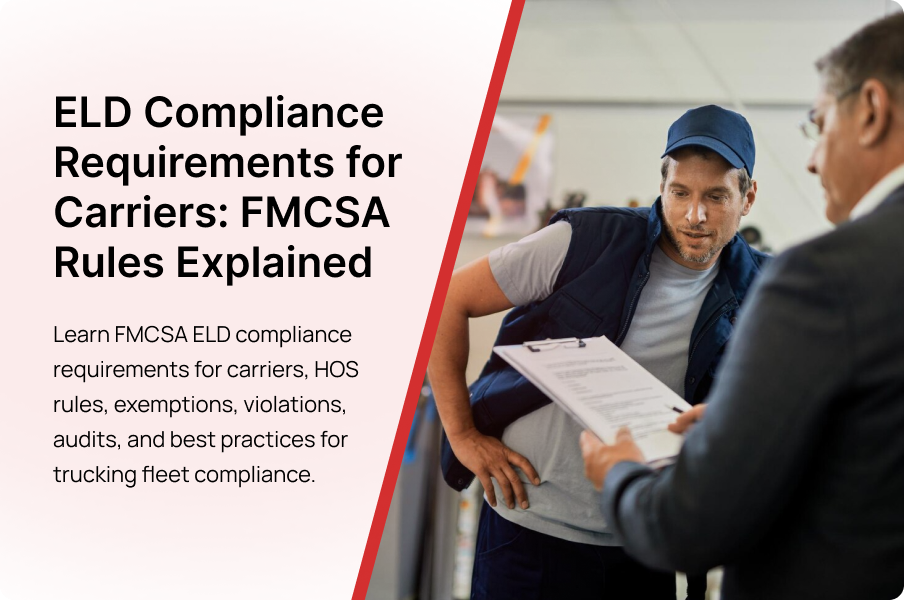
Electronic Logging Device (ELD) compliance has become a core operational requirement for modern trucking companies. The Federal Motor Carrier Safety Administration introduced the ELD mandate to improve Hours of Service (HOS) enforcement, reduce driver fatigue, and increase roadway safety across commercial transportation operations.
Today, carriers must manage more than simple log tracking. ELD compliance affects driver scheduling, dispatch coordination, DOT roadside inspections, audit readiness, insurance exposure, and overall fleet productivity. Whether operating as an owner-operator, small fleet, or enterprise carrier, understanding FMCSA ELD regulations helps reduce violations, avoid penalties, and improve operational efficiency.
This guide explains ELD compliance requirements for carriers, including HOS regulations, exemptions, inspection procedures, violations, and best practices for long-term compliance management.
Understanding ELD Compliance in Modern Trucking Operations
What Is an Electronic Logging Device (ELD)?
An Electronic Logging Device (ELD) is a system connected to a commercial vehicle’s engine that automatically records driving time and Hours of Service data. ELDs replace traditional paper logs and reduce manual log manipulation.
Modern ELD systems collect:
- Engine hours
- Vehicle movement data
- GPS location tracking
- Duty status changes
- Odometer readings
- Driver authentication records
The ELD synchronizes with the Engine Control Module (ECM) and automatically generates Records of Duty Status (RODS). This improves compliance accuracy while helping carriers maintain audit-ready documentation.
Why the FMCSA Introduced the ELD Mandate
The ELD mandate was created to reduce fatigue-related crashes and strengthen HOS enforcement across interstate trucking operations.
The mandate focuses on:
- Preventing falsified paper logs
- Standardizing HOS tracking
- Improving roadside inspection efficiency
- Increasing carrier accountability
- Enhancing highway safety
Before ELD adoption, paper log inconsistencies created enforcement gaps. Automated logging systems now provide more accurate duty-status monitoring and real-time compliance visibility.
How ELD Compliance Impacts Carrier Operations
ELD compliance affects nearly every area of fleet management.
Operational impacts include:
- Real-time dispatch visibility
- Automated driver log management
- Improved route planning
- Reduced paperwork
- Faster DOT inspections
- Better CSA score management
- Enhanced audit readiness
For many carriers, ELD platforms also integrate with telematics systems, GPS tracking, fuel monitoring, and fleet management software to improve operational control.
Core FMCSA ELD Compliance Requirements for Carriers
Which Carriers Must Comply With the ELD Mandate?
Most interstate carriers operating Commercial Motor Vehicles (CMVs) must comply with FMCSA ELD regulations.
This typically includes:
- Long-haul trucking companies
- Owner-operators
- Freight carriers
- Logistics fleets
- Refrigerated carriers
- Flatbed and dry van operators
Carriers required to maintain HOS records generally fall under the ELD mandate unless they qualify for a specific exemption.
Mandatory ELD System Requirements
FMCSA-compliant ELD systems must meet technical and operational standards.
Required capabilities include:
- Automatic drive-time recording
- ECM synchronization
- GPS location tracking
- Duty status monitoring
- Secure data transfer
- Tamper-resistant log storage
- Driver log certification functionality
Certified ELD devices must also appear on the FMCSA registered device list.
Required ELD Documents Carriers Must Maintain
Drivers and carriers must maintain specific compliance documents inside the vehicle and within carrier records.
Required documentation includes:
- ELD instruction sheet
- User manual
- Malfunction procedures
- Driver log records
- Supporting shipping documents
- Fuel receipts and toll records
Missing documentation can create compliance violations during DOT inspections.
ELD Record Retention and Documentation Rules
FMCSA regulations require carriers to retain ELD records and supporting documents for at least six months.
Supporting documents may include:
- Bills of lading
- Dispatch records
- Fuel receipts
- Toll records
- GPS activity logs
Proper digital record organization improves audit readiness and reduces enforcement risk during compliance reviews.
Hours of Service (HOS) Rules Linked to ELD Compliance
Understanding HOS Duty Status Categories
ELD systems track driver activity using multiple duty status categories.
These include:
- Off-duty
- Sleeper berth
- Driving
- On-duty not driving
- Personal conveyance
- Yard moves
Each status affects HOS calculations differently and directly impacts legal driving availability.
How ELDs Automatically Track Driving Time
ELD devices automatically detect vehicle movement and switch duty status when the truck begins driving.
The system records:
- Driving duration
- Engine hours
- Vehicle location
- Odometer movement
- Status changes
This automation reduces manual entry errors while strengthening compliance enforcement.
Common HOS Violations Detected Through ELD Systems
ELDs help enforcement officers quickly identify compliance issues.
Common violations include:
- Exceeding driving limits
- Missed mandatory breaks
- False log edits
- Unassigned driving time
- Form and manner violations
- Incorrect sleeper berth usage
Frequent violations negatively impact CSA scores and increase audit risk.
Sleeper Berth and Split Duty Compliance Tracking
Modern ELD systems calculate split sleeper berth rules automatically.
This helps drivers:
- Manage rest periods correctly
- Avoid HOS miscalculations
- Maintain operational flexibility
- Reduce accidental violations
Accurate sleeper berth tracking is especially important for long-haul operations and team driving fleets.
ELD Exemptions and Special Compliance Situations
Carriers Exempt From ELD Requirements
Certain carriers and operations qualify for FMCSA ELD exemptions.
Common exemptions include:
- Short-haul operations
- Pre-2000 engine vehicles
- Driveaway-towaway operations
- Agricultural transportation exemptions
Even exempt carriers may still need to comply with other HOS requirements.
Temporary Paper Log Exceptions
Drivers may temporarily use paper logs during:
- ELD malfunctions
- Emergency operations
- Temporary replacement periods
However, carriers must repair or replace malfunctioning ELD systems within FMCSA deadlines.
Cross-Border and Multi-State Compliance Considerations
Cross-border carriers operating between the United States and Canada must maintain compliance across multiple regulatory environments.
Important considerations include:
- Jurisdiction-specific HOS rules
- International inspection standards
- Border crossing documentation
- Provincial compliance differences
Multi-state carriers also face varying intrastate operational requirements.
ELD Malfunctions, Violations, and Enforcement Risks
Common ELD Compliance Violations
Some of the most common ELD violations involve poor documentation management and improper system usage.
Violations include:
- Using non-certified ELD devices
- Failure to transfer logs during inspections
- Missing supporting documents
- Driver authentication issues
- Improper log edits
- Incomplete duty status records
Repeated violations increase enforcement attention.
What Happens During a DOT Roadside Inspection?
During a roadside inspection, enforcement officers review ELD records and supporting compliance documentation.
The inspection process may include:
- Driver identification review
- HOS log inspection
- ELD data transfer
- Supporting document verification
- Violation review
Fast and accurate ELD data transfer improves inspection efficiency and reduces delays.
ELD Malfunction Reporting Requirements
When an ELD malfunctions, drivers and carriers must follow FMCSA reporting procedures.
Carrier responsibilities include:
- Documenting the malfunction
- Maintaining temporary paper logs
- Repairing the device promptly
- Preserving compliance records
Failure to address malfunctions properly can result in citations.
Penalties for ELD Non-Compliance
ELD non-compliance creates operational and financial risks.
Possible consequences include:
- DOT fines
- Out-of-service orders
- Increased CSA scores
- Insurance premium increases
- Audit exposure
- Delayed freight operations
Long-term violations may damage carrier reputation and broker relationships.
Operational Benefits of ELD Compliance for Carriers
Improved Fleet Visibility and Dispatch Coordination
ELD systems provide dispatchers with real-time operational visibility.
Benefits include:
- Driver location tracking
- Route monitoring
- ETA forecasting
- Delivery coordination
- Better load planning
Integrated ELD and dispatch systems help reduce deadhead miles and improve fleet efficiency.
Reduced Administrative Workload
Automated logging significantly reduces manual paperwork.
Operational improvements include:
- Faster log processing
- Simplified compliance reporting
- Reduced administrative labor
- Faster audits
- Digital documentation storage
This improves workflow efficiency for both drivers and back-office teams.
Driver Safety and Fatigue Reduction
ELDs strengthen HOS enforcement and encourage safer driving schedules.
Safety advantages include:
- Better rest management
- Reduced fatigue exposure
- Improved operational oversight
- Reduced crash risk
Carriers with strong compliance programs often experience better long-term safety performance.
Fuel Efficiency and Productivity Optimization
Many ELD platforms include telematics and fleet analytics tools.
These systems help monitor:
- Idle time
- Fuel consumption
- Route efficiency
- Driver behavior
- Vehicle utilization
Operational analytics improve profitability while supporting compliance goals.
Choosing the Right ELD System for Carrier Compliance
Features Carriers Should Look for in an ELD Platform
An effective ELD platform should support both compliance and operational management.
Important features include:
- FMCSA certification
- User-friendly mobile apps
- Real-time alerts
- Offline capability
- Cloud dashboard access
- Automated reporting
- GPS visibility
Strong technical support and software reliability are also critical.
ELD Integration With Fleet Management Systems
Advanced ELD platforms often integrate with:
- Dispatch systems
- IFTA reporting tools
- Fuel card systems
- Maintenance software
- Dashcams
- Route optimization platforms
Integrated systems improve operational coordination and data accuracy.
Best ELD Solutions for Small Fleets vs Enterprise Carriers
Small fleets often prioritize:
- Affordability
- Easy setup
- Basic compliance features
Enterprise carriers typically require:
- Advanced analytics
- Multi-driver management
- Telematics integration
- Centralized compliance dashboards
Choosing the correct ELD platform depends on fleet size, operational complexity, and growth plans.
Common Mistakes Carriers Make When Selecting ELD Providers
Common purchasing mistakes include:
- Selecting non-certified devices
- Ignoring integration compatibility
- Underestimating driver training needs
- Choosing unreliable vendors
- Prioritizing low cost over compliance stability
A poorly selected ELD system can create long-term operational challenges.
Best Practices for Maintaining Long-Term ELD Compliance
Building an Internal Compliance Monitoring System
Strong compliance programs require ongoing oversight.
Best practices include:
- Internal compliance audits
- Driver scorecards
- Violation tracking
- Safety manager oversight
- Monthly compliance reviews
Proactive monitoring reduces enforcement exposure.
Training Drivers and Fleet Managers on ELD Usage
Driver education remains essential for successful ELD compliance.
Training should cover:
- Log certification procedures
- Duty status management
- Annotation usage
- Roadside inspection procedures
- Malfunction reporting
Well-trained drivers reduce operational errors and inspection delays.
Conducting Regular ELD Audits and Data Reviews
Routine compliance reviews help carriers identify recurring risks.
Audit focus areas include:
- Unassigned driving records
- Supporting document accuracy
- HOS violations
- Driver edit patterns
- Log consistency
Early detection improves long-term compliance stability.
Preparing for FMCSA Audits and Investigations
Audit-ready carriers maintain organized digital compliance systems.
Preparation strategies include:
- Secure record retention
- Centralized compliance management
- Rapid document retrieval
- Accurate supporting documentation
- Consistent driver oversight
Audit readiness reduces operational disruption during investigations.
Future Trends in ELD Compliance and Fleet Technology
AI-Based Compliance Monitoring Systems
Artificial intelligence is improving fleet compliance monitoring.
Emerging capabilities include:
- Predictive violation alerts
- Driver behavior analysis
- Automated compliance scoring
- Risk forecasting
AI systems help carriers identify safety risks earlier.
Telematics and Real-Time Fleet Intelligence
Modern telematics systems combine:
- GPS tracking
- Vehicle diagnostics
- Driver monitoring
- Fuel analytics
- Dispatch coordination
Connected fleet ecosystems improve operational visibility and decision-making.
The Evolution of Digital Fleet Compliance
Digital compliance platforms continue evolving toward automation and centralized fleet management.
Future developments may include:
- Advanced automation
- Predictive maintenance integration
- Real-time safety analytics
- Cloud-based operational control systems
Technology-driven compliance management is becoming a competitive advantage for modern carriers.
Conclusion
ELD compliance is no longer limited to regulatory paperwork. It has become a core operational system that affects safety, fleet visibility, audit readiness, dispatch coordination, and long-term profitability.
Carriers that implement reliable FMCSA-certified ELD systems, train drivers properly, maintain organized compliance records, and conduct regular audits reduce enforcement risk while improving operational performance.
As trucking operations become more technology-driven, ELD compliance will continue playing a central role in fleet safety, regulatory management, and business sustainability.
Frequently Asked Questions About ELD Compliance Requirements for Carriers
General ELD Compliance Questions
What carriers are required to use ELDs?
Most interstate carriers operating CMVs and maintaining HOS records must use FMCSA-compliant ELD devices.
How long must carriers retain ELD records?
Carriers must generally retain ELD records and supporting documents for at least six months.
Are owner-operators exempt from ELD requirements?
Owner-operators may qualify for exemptions only under specific FMCSA exemption categories.
What documents should drivers keep inside the truck?
Drivers should carry ELD instruction sheets, user manuals, malfunction guides, and supporting compliance documents.
Violations and Enforcement Questions
What happens if an ELD malfunctions?
Drivers may temporarily use paper logs while the carrier repairs or replaces the malfunctioning ELD.
What are common ELD violations?
Common violations include missing records, unassigned driving time, uncertified devices, and HOS violations.
Can drivers edit ELD logs?
Drivers may make limited edits with proper annotations, but original records must remain visible.
What happens during a DOT roadside inspection?
Inspectors review ELD records, HOS compliance, supporting documents, and driver identification information.
Operational and Technology Questions
How do ELDs improve fleet productivity?
ELDs improve dispatch visibility, reduce paperwork, optimize routing, and support better operational planning.
Can ELDs integrate with dispatch software?
Many ELD systems integrate with dispatch, telematics, fuel tracking, and maintenance platforms.
What features should carriers look for in an ELD?
Carriers should prioritize FMCSA certification, GPS tracking, offline capability, reporting tools, and integration support.
Are ELD systems useful for small fleets?
Yes, ELD systems help small fleets improve compliance, operational efficiency, and audit readiness.